

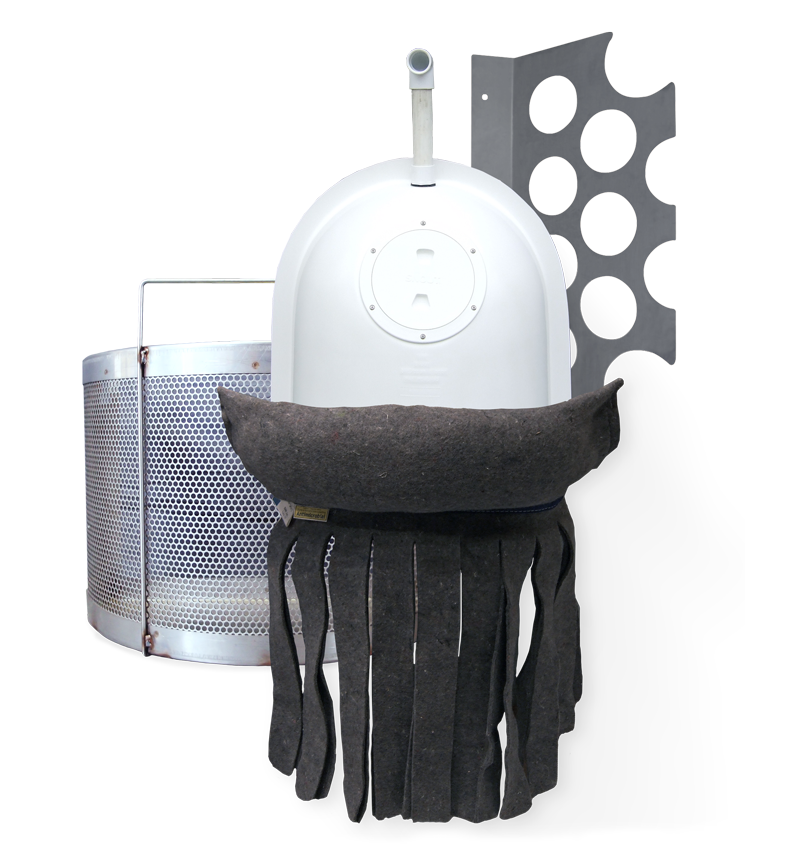
About The SNOUT.
We celebrate 25 Years in business with over 100,000 installations since 1999 as the SNOUT system remains one of the most popular stormwater quality improvement options in North America. These stormwater structure and catch basin hoods have helped cities, major corporations, the U.S. military, government installations and more to be better stewards of our environment. We would be honored to help you design your next project with our catch basin hood systems, sediment, and storm drain trap products.

Frequently Asked Questions
What is a SNOUT?
A SNOUT is a vented fiberglass stormwater structure and catch basin hood that improves water quality. They are is installed over the outlet pipe in a storm water structure with a sump that skims oils, floatables and trash off of the surface water while letting settleable solids sink to the bottom. The cleaner water exits from beneath the SNOUT, which is lower than the bottom of the pipe, but above the bottom of the structure allowing both floatable material and solids that sink to stay in the structure.<p>Start from the <a href="https://bmpinc.com/">BMP homepage</a>, or see the full line on the <a href="https://bmpinc.com/products/">products page</a>.</p> <h2>Stormwater Snout vs catch basin hood</h2> <p>“Catch basin hood” is the generic name for an outlet baffle that hangs over the pipe in a sumped structure. SNOUT is BMP’s vented fiberglass (and plastic-composite) stormwater snout. It does the same job: skim floatables and free oils at the surface, let settleable solids drop into the sump, and send cleaner water out from beneath the hood.</p> <h2>How a stormwater snout works</h2> <ol> <li>Install over the outlet pipe in a catch basin or manhole with a sump.</li> <li>The hood bottom sits below the pipe invert and above the structure floor.</li> <li>Incoming flow pushes the clearer middle layer out under the hood.</li> <li>Trash, debris, and free oils stay on the surface. Heavier solids stay in the sump.</li> </ol> <h2>Sizing and structure</h2> <p>The right SNOUT is always larger than the pipe. Use <a href="https://bmpinc.com/spec-a-snout/">Spec a SNOUT</a> for the size, and <a href="https://bmpinc.com/snout-structure-design/">Snout structure design</a> for the layout.</p> <h2>Trash capture and the rest of the line</h2> <p>Full <a href="https://bmpinc.com/snout-trash-capture-hood/">trash-capture hoods</a></p> <p>Specialty and retrofit: <a href="https://bmpinc.com/specialty-snouts/">specialty Snouts</a></p> <p>Product family: <a href="https://bmpinc.com/products/">BMP products page</a></p>
Start from the BMP homepage, or see the full line on the products page.
Stormwater Snout vs catch basin hood
“Catch basin hood” is the generic name for an outlet baffle that hangs over the pipe in a sumped structure. SNOUT is BMP’s vented fiberglass (and plastic-composite) stormwater snout. It does the same job: skim floatables and free oils at the surface, let settleable solids drop into the sump, and send cleaner water out from beneath the hood.
How a stormwater snout works
- Install over the outlet pipe in a catch basin or manhole with a sump.
- The hood bottom sits below the pipe invert and above the structure floor.
- Incoming flow pushes the clearer middle layer out under the hood.
- Trash, debris, and free oils stay on the surface. Heavier solids stay in the sump.
Sizing and structure
The right SNOUT is always larger than the pipe. Use Spec a SNOUT for the size, and Snout structure design for the layout.
Trash capture and the rest of the line
Full trash-capture hoods:
Specialty and retrofit: specialty Snouts
Product family: BMP products page
Can I use the same SNOUT size as my pipe size?
No, the correct SNOUT size will always be bigger than the pipe size. See more explanation of SNOUT sizing and model names below.
Do you make SNOUTs for round structures.
Yes, there are SNOUT catch basin baffle and hood models for both round and flat wall structures.
How deep should the sump be in a SNOUT structure?
BMP recommends a depth of 2.5 times the outlet pipe ID or a minimum of 3’ for pipes 12” ID or less, whichever is greater.
Why does BMP recommend deep sumps for SNOUT structures?
The deeper the sump, the more effective the stormwater structure and catch basin filters will be both in terms of pollutant removals and reducing frequency of maintenance. More depth in a structure means more quiescence, thus allowing the pollutants a better chance to separate out and the basin drain filter to be more effective. Also, a deeper sump results in less scouring, thus the captured solids are more likely to be retained in the structure with the help of a catch basin trap. Finally, more depth provides more volume, which means fewer cycles between maintenance, which reduces the service cost over the lifetime of the facility.